

Tutankhamun… the golden pharaoh immortalized by legends

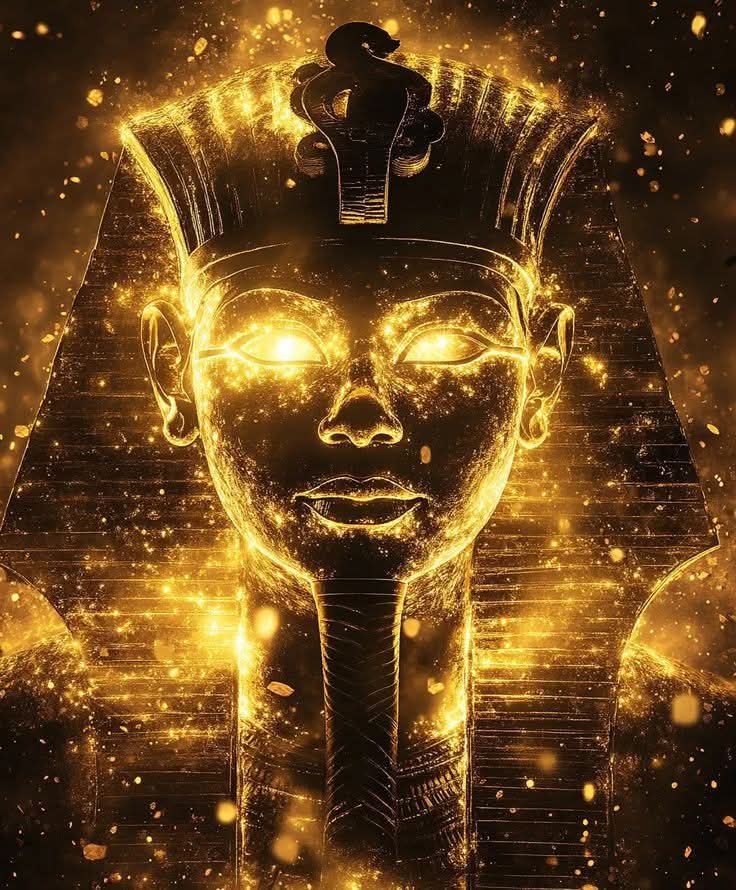
Tutankhamun, one of the most famous kings of the Eighteenth Dynasty of ancient Egypt, was born around 1341 BC. He was the son of Akhenaten (known for his religious revolution in promoting the worship of the god Aten alone), and his mother was likely one of his secondary wives, Kiya.
Tutankhamun grew up during a period of religious and political upheaval, following the transformation of religious practices under his father.
He ascended the throne at approximately nine years old, after his father’s death. Due to his young age, the affairs of state were effectively managed by others, most notably the vizier Ay and the military commander Horemheb.
His original name upon assuming the throne was Tutankhaten, meaning “Living Image of Aten,” but he later changed it to Tutankhamun, meaning “Living Image of Amun,” signifying the restoration of the worship of Amun and the revival of the traditional religion of ancient Egypt.
Although his reign was short (only about 9 years), it was filled with reforms:
▪️He reinstated the priests to their temples in Thebes.
▪️He restored the temples destroyed by his father during his religious revolution.
▪️He helped restore stability to the country after years of chaos.
▪️He encouraged the arts, and reliefs, statues, and decorations flourished during his reign.
❤️ Tutankhamun married Ankhesenamun, the daughter of King Akhenaten and Queen Nefertiti, making her his half-sister.
Inscriptions show that their relationship was filled with love and respect, but their marriage did not produce an heir. Two mummies of fetuses, believed to be his daughters, were found in his tomb.
His mysterious death: Tutankhamun died at a very young age, around 18 or 19, and his death remains a mystery that continues to spark debate to this day.
Numerous theories exist regarding the cause of his death:
▪️A leg injury that led to a serious infection.
▪️A chariot accident.
▪️Perhaps a hereditary disease and general weakness resulting from consanguineous marriage within the royal family.
However, there is no conclusive evidence to this day, which has only added to the mystique surrounding his personality and the allure of his legend.
The discovery of his tomb:
In 1922, British archaeologist Howard Carter discovered the tomb of Tutankhamun in the Valley of the Kings in Luxor.
The tomb was almost intact and unplundered, containing more than 5,000 stunning artifacts, most notably the famous golden mask that became a symbol of ancient Egyptian civilization.
This discovery changed the course of archaeology forever and revived global interest in ancient Egypt.
Despite his short reign, Tutankhamun became one of the greatest symbols of ancient Egypt.
His name is immortalized in history thanks to his magnificent treasures, his enigmatic story, and his image that combined royal innocence with pharaonic majesty.
Today, his golden mask is displayed in the Grand Egyptian Museum as an icon of Egyptian identity and its ancient civilization.
Tutankhamun was not merely a young king who ascended the throne at a young age; he became an enduring legend whose story is passed down through generations.
His rediscovery has revived the glory of the pharaohs and proven that even the shortest reigns can leave a lasting impact on history.
◾️Article by Eman Sayed..