

Nefertiti… The Lady of the Amarna Period and the Beautiful Woman Who Ruled Egypt

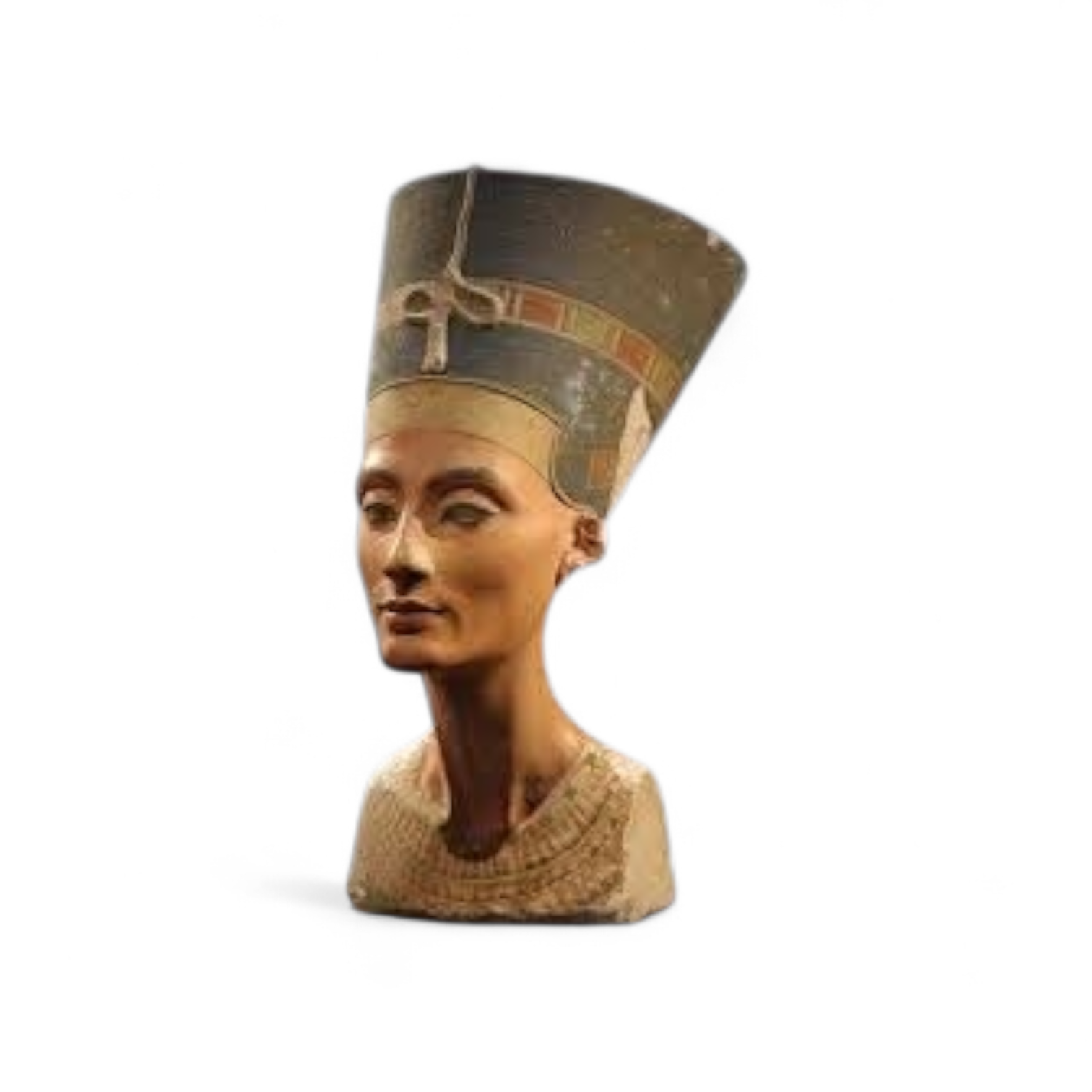
Queen Nefertiti is considered one of the most powerful and enigmatic women in ancient Egyptian history.
Her name, meaning “The Beautiful One Has Come,” is not merely a description of her features, immortalized in her famous bust, but rather an embodiment of her pivotal role in one of Egypt’s most controversial periods (the Amarna Period). This pivotal period in ancient Egyptian history (late 18th Dynasty, around the 14th century BC) was characterized by a religious revolution and a radical artistic transformation under the leadership of Pharaoh Akhenaten (Amenhotep IV) and his wife, Nefertiti.
Origins and Origins: The Mystery of the Beginning:
Despite her widespread fame, Nefertiti’s origins remain a subject of scholarly debate. There are two main theories regarding her roots:
Egyptian Origin: Many believe she was the daughter of Ay, a high-ranking advisor in the royal court who later became pharaoh. Foreign Origin: Some have suggested she was a princess from the Mitanni kingdom, sent to marry the king of Egypt, but the evidence leans more towards her purely Egyptian origins.
Marriage to Amenhotep IV: A Revolution in Belief:
Nefertiti married King Amenhotep IV (Akhenaten) at the beginning of his reign. She was not just a wife, but the “Great Royal Wife” and a full partner in governance.
Together, they led the greatest religious revolution:
They abandoned the worship of the god Amun and the traditional deities.
They advocated the worship of one god, Aten (the sun disk).
They built an entirely new capital, Akhetaten (modern-day Tell el-Amarna).
Political and Religious Role: The Powerful Queen
Nefertiti enjoyed a status unprecedented for any queen before her, as evidenced in Amarna art:
Equality in Depiction: She appears in reliefs at the same size as the king, a symbol of absolute power.
The Holy Trinity: She, her husband, and their six daughters were the link between the people and the gods.
Scenes of Repression: Inscriptions depict her “disciplining enemies,” a scene historically reserved for male monarchs!
The Beauty Who Captivated the World: The Berlin Statue:
It’s impossible to speak of her without mentioning her painted bust, discovered in 1912.
This bust showcased the delicate features, long neck, and beauty that made her a global icon of elegance and timeless beauty.
Disappearance and Mystery: Where Did the Queen Go?
In the 12th year of Akhenaten’s reign, Nefertiti suddenly disappeared! Numerous theories have been proposed.
Death: A result of a sudden plague that swept through the country.
Exile: Due to a political dispute within the palace.
Rule as Pharaoh: The most intriguing theory is that she ruled Egypt alone as king (pharaoh) after her husband’s death, under the name “Smenkhkare.”
Nefertiti remains a symbol of the woman who combined breathtaking beauty with absolute power.
Despite the passage of thousands of years, the search for her tomb and mummy remains the ultimate dream of archaeologists, as finding them could solve one of the greatest mysteries in human history.
◾️Article by Eman Sayed..